The craft, rhythm and personality behind a great taco stand.
Proposed WikiTacos championship
A competition concept in development. Registration is not open. No dates, prizes, entrants or winners have been announced.
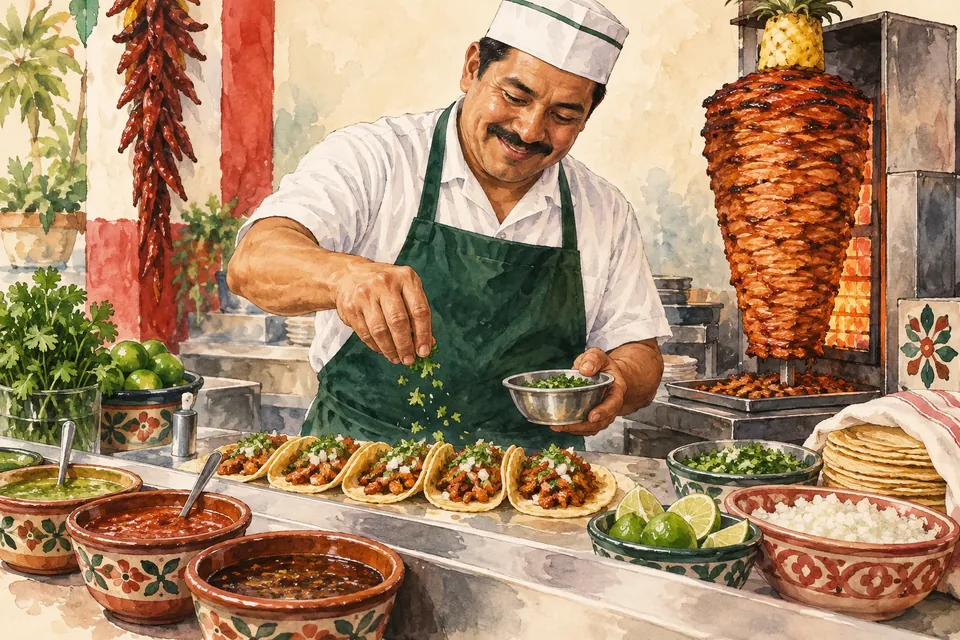
Original AI-generated illustration of a fictional taquero, not a portrait of any person featured below.
Two titles. Two ways to shine.
Best Taquero Showman
Technique, presentation, personality and audience connection. A proposed judging rubric would reward skill and originality while keeping food handling central.
Fastest Taco Maker
A timed round with the same tortilla, filling weight, toppings and equipment for every entrant. Only complete tacos meeting the published quality standard would count.
The proposed road to the title, in each country
1. Regional roundsLocal taqueros compete in their own region.
2. State championshipRegional winners compete for the state title.
3. National championshipState winners compete for each national title.
Separate U.S. and Mexico championships are planned. San Diego and Los Angeles regional winners would advance to California finals and then the U.S. national championship. Tijuana regional winners would advance to Baja California finals and then the Mexico national championship. Each country would crown its own Best Taquero Showman and Fastest Taco Maker. Final qualifying boundaries and eligibility rules will be published before registration opens.
What makes great showmanship?
Watch control of the trompo, smooth tortilla handling, clean assembly, timing and how the taquero welcomes a crowd. Popularity and viral views alone do not establish who is fastest or best.
WikiTacos must publish eligibility, regional boundaries, judging weights, timing and tie-break rules, food handling requirements, judge independence, filming consent, venue arrangements and prize terms. Showmanship and speed will be judged separately. No dangerous blade or flame tricks should be required or rewarded.
Showmanship worth exploring
Documented examples of craft and performance. These are not rankings or announced contestants, and no measured speed records are claimed.
Jorge “Joy” Alvarez-Tostado / Tacos 1986
Los Angeles, California, United States
L.A. TACO documented the dancing chef behind Tacos 1986 and later described his crowd-facing showmanship at the downtown opening. His performance is an example of personality and audience connection at the taco station.
Roads & Kingdoms reported a Tacos Fito taquero moving birria from a ladle to a taco across outstretched arms. The documented serving flourish makes this a useful example of theatrical taco assembly. The report does not establish a measured speed record.
L.A. Weekly described the taqueros flicking pineapple through the air as part of al pastor service. The pineapple cut-and-catch illustrates the coordination and presentation that can turn ordinary service into a small performance.
In Hayo Magazine’s interview at El Tizoncito, the preparation includes slicing pork into a tortilla and catching pineapple cut from the top of the trompo. This feature documents the technique; it does not verify the restaurant’s broader invention claims or any competition result.
Rick Bayless’s televised visit documents the taquería’s large trompos and street-side al pastor service. It is an example of the visual craft and coordinated production behind a busy taco station, without claiming a fastest-maker title.